Our Research Areas
We combine rigorous numerical method development with physics-driven investigation of unsteady flow phenomena across three interconnected research thrusts.
Emergent Flow-Structure Interaction
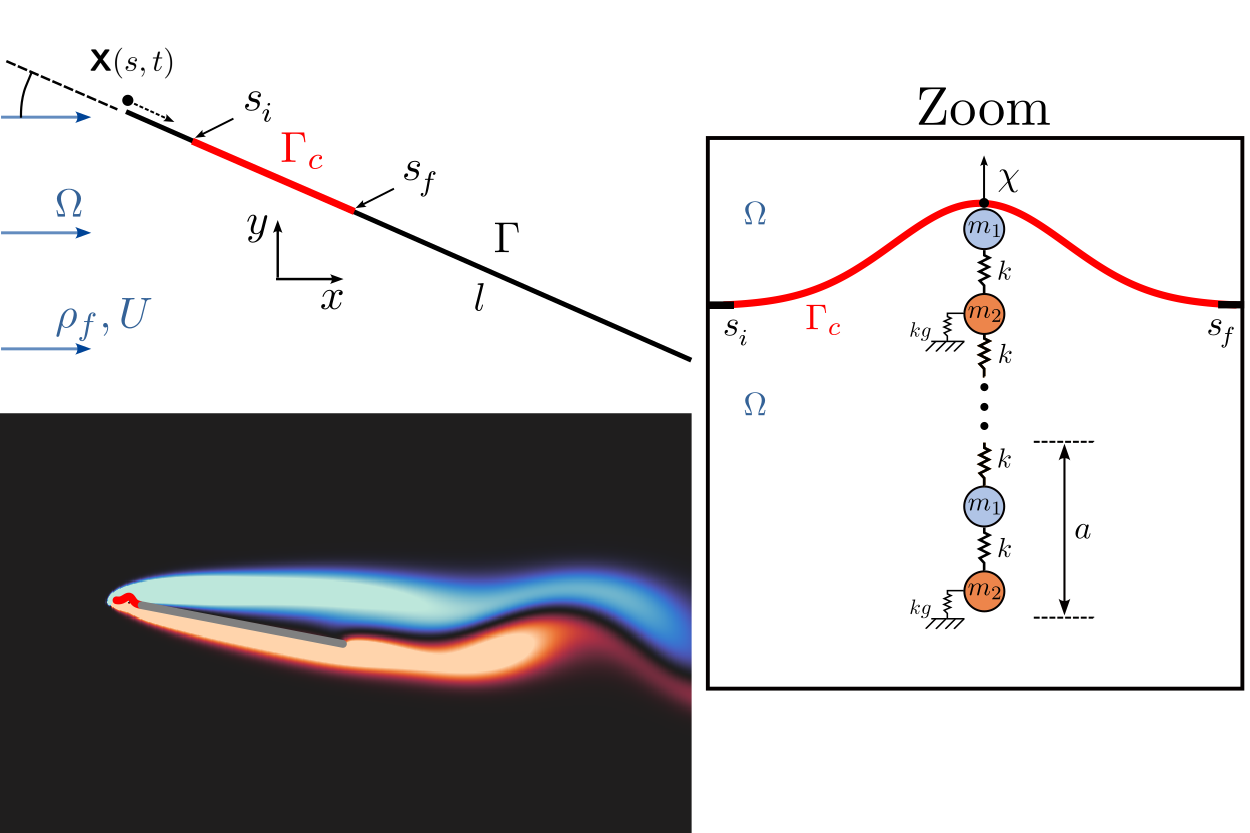
We target passive, adaptive solutions to unresolved flow control problems. We do this by pairing new architected structures with behaviors matched to the time- and length-scales, directional dependence, and state changes of the underlying flow. These architectures can be designed through bio-inspiration or advances in various structural mechanics communities.
We are also interested in creating new coupled behaviors for better flow sensing and estimation, harnessing mechanical computation to facilitate non-centralized logic for control and sensing, and any arena where new structural behaviors produce bewitching coupled behavior.
Computational Frameworks for Flow-Interface Problems
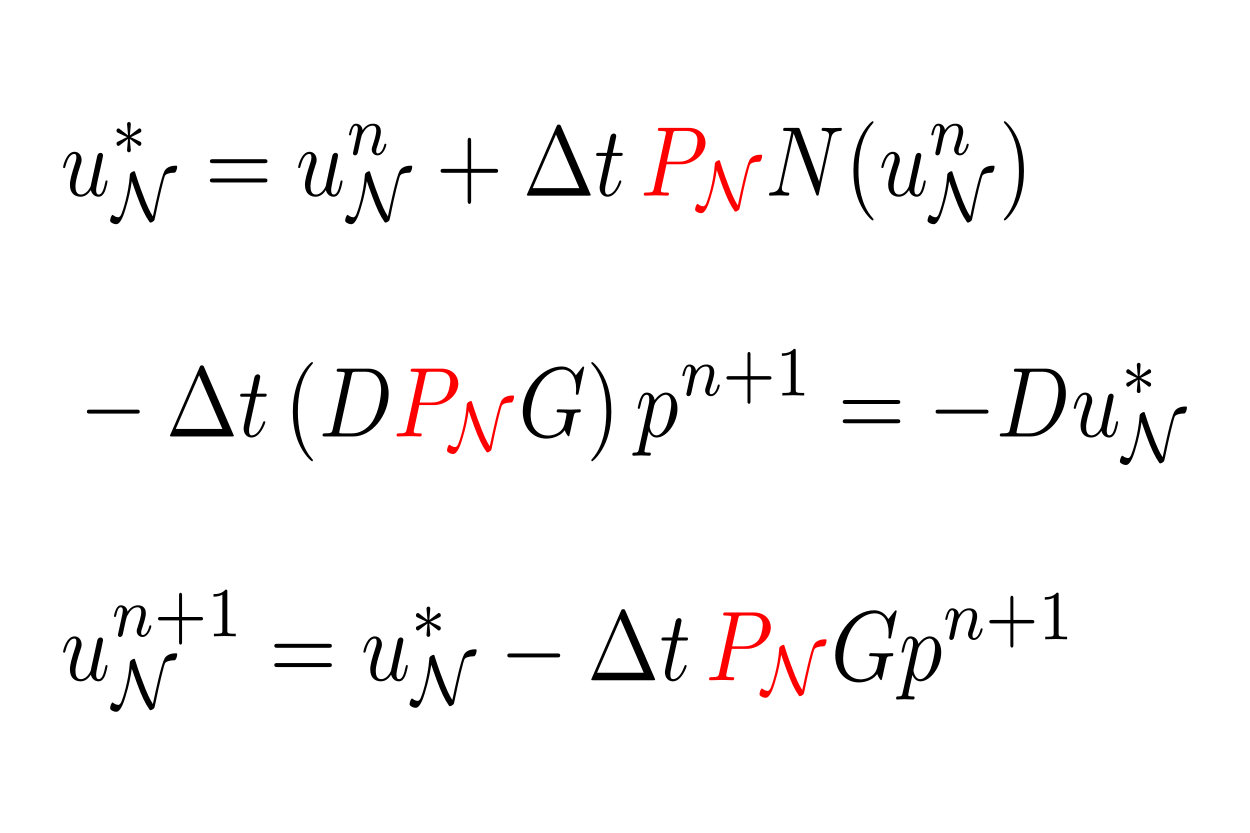
We build computational tools to study coupled problems for flows involving interfaces. We seek creative solutions that are rigorously accurate in their treatment of the interfaces while preserving speed and modularity.
We want methods that have the same complexity as solvers for flows without interfaces, and we want to introduce as few additional (non)linear systems and operator modifications as possible, so that highly tuned flow and structure solvers can readily adopt our interface treatment. We also want to build tools that can directly make use of GPU architectures and tools like automatic differentiation that are fueling a new generation of machine learning and optimization algorithms.
Geometric and Dynamic Foundations for Flow Simulations
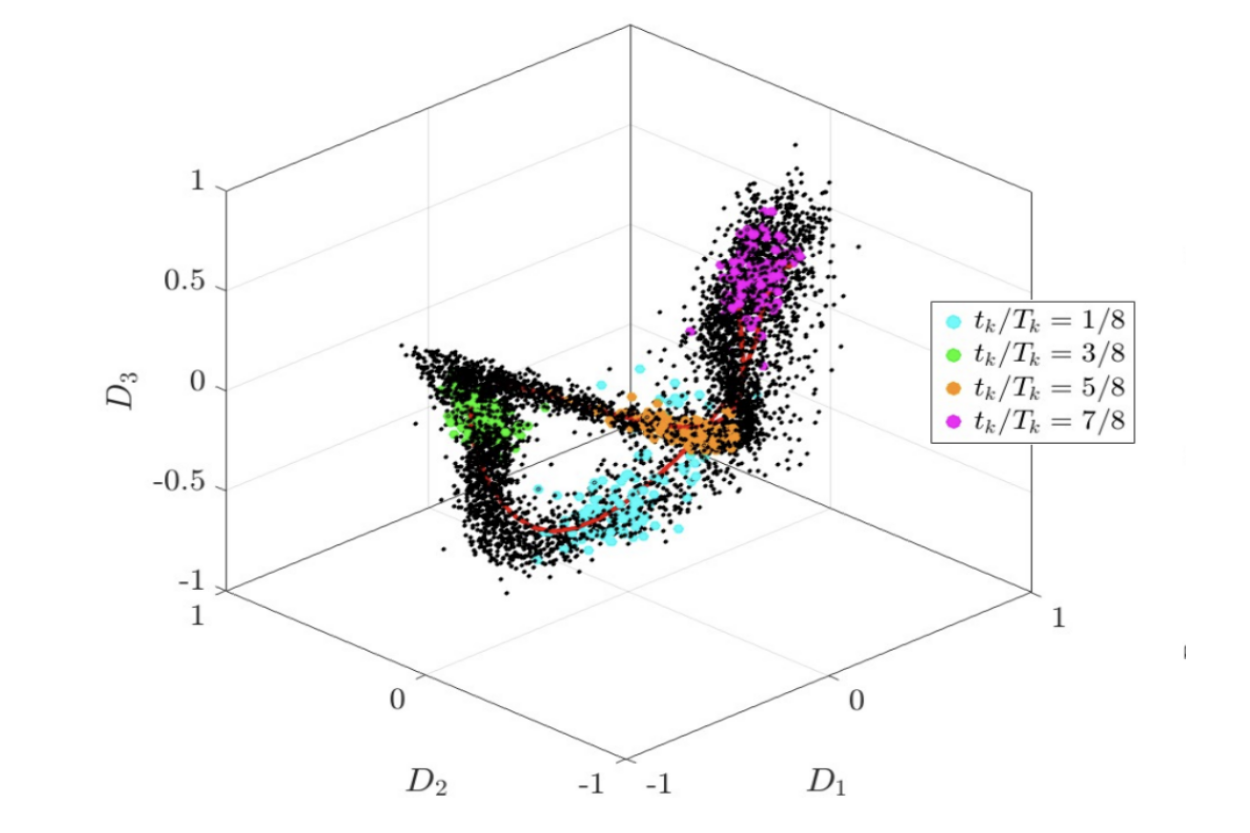
We believe that fast and accurate computations for fluid flows — high order and reduced — require creative engagement with concepts not typically leveraged in computational fluid dynamics. We are pursuing geometric perspectives of the interface boundary conditions and the algorithms it implies.
We are using phase space representations of strongly cyclical systems and how that can be used to categorize within and across cycles of behavior. We are willing to fail big in the hunt to create new framings of old problems that, if successful, unlock big changes to how we understand and compute them.
Collaborations & Funding
We welcome collaborations with academia and industry on problems involving unsteady flows, numerical methods, and computational engineering. Current support includes grants from the Air Force Office of Scientific Research (AFOSR), National Science Foundation (NSF), and internal UIUC funding.
Get in Touch